
Introduction
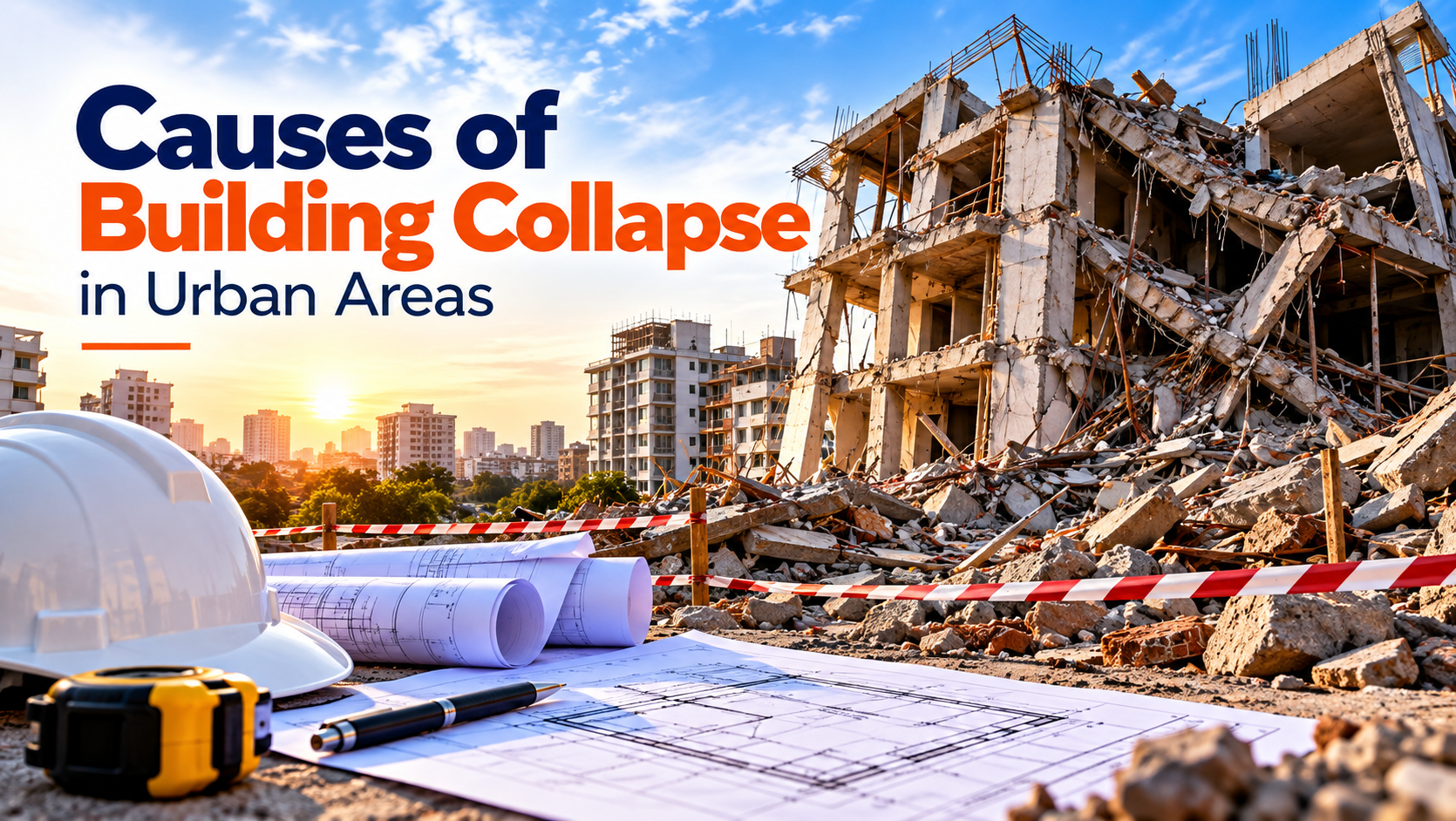
Building collapse is one of the most devastating failures in the built environment, often resulting in loss of life, property destruction, economic losses, and reduced public confidence in the construction industry.
As urban populations continue to grow, cities are experiencing increased demand for housing, commercial spaces, and infrastructure. This rapid urbanization has unfortunately been accompanied by a rise in cases of building failures and collapses in many developing and developed countries alike.
Understanding the causes of building collapse is essential for property developers, consultants, contractors, regulators, and the general public in order to promote safer construction practices and sustainable urban development.
1. Poor Structural Design
One of the leading causes of building collapse is inadequate structural design. Buildings must be designed to safely withstand loads such as their own weight, occupants, furniture, wind, and seismic forces where applicable. Errors in calculations, incorrect assumptions, or failure to comply with design standards can result in structures that are incapable of carrying the intended loads.
Common design-related issues include:
– Undersized structural members
– Inadequate reinforcement detailing
– Failure to account for future load increases
– Poor consideration of soil conditions
2. Substandard Construction Materials
The use of poor-quality construction materials significantly weakens a building’s structural integrity. Inferior cement, weak concrete, low-quality steel reinforcement, and defective masonry units may fail long before the building reaches its intended service life.
Factors contributing to material-related failures include:
– Counterfeit or uncertified products
– Poor storage of materials on site
– Failure to conduct quality control tests
– Cost-cutting measures by developers or contractors
3. Inadequate Supervision During Construction
Even a well-designed building can fail if construction works are not properly supervised. Lack of professional oversight may result in deviations from approved drawings and specifications. Examples include:
– Incorrect reinforcement placement
– Poor concrete mixing and curing
– Unauthorized design alterations
– Failure to follow construction procedures
Regular inspection by qualified engineers, architects, and clerks of works is essential to ensure compliance with design requirements.
4. Weak or Inadequate Foundations
Foundation failure is a major contributor to building collapse, especially in urban areas where land is scarce and construction often occurs on challenging sites. Common causes include:
– Failure to conduct geotechnical investigations
– Building on unsuitable or reclaimed land
– Differential settlement
– Inadequate foundation sizing
A thorough soil investigation should always precede structural design to determine the appropriate foundation system.
5. Unauthorized Alterations and Change of Use
Many buildings collapse after owners make modifications without consulting professionals. Additional floors, removal of load-bearing walls, or conversion of residential buildings into commercial facilities can overload the structure. Examples include:
– Adding extra storeys
– Installing heavy equipment
– Removing structural walls or columns
– Converting houses into warehouses
Such alterations can drastically reduce a building’s safety margin.
6. Overloading of Structures
Buildings are designed for specific load capacities. Exceeding these limits can lead to structural distress and eventual collapse. Common examples include:
– Excessive storage of goods
– Water tanks larger than designed
– Heavy machinery installation
– Overcrowding of buildings
Structural assessments should be carried out whenever significant additional loads are anticipated.
7. Corruption and Regulatory Failures
Weak enforcement of building regulations is a significant challenge in many urban areas. Corruption may allow developers to bypass approval procedures, use unqualified personnel, or ignore safety standards. Regulatory shortcomings may include:
– Approval of non-compliant plans
– Inadequate site inspections
– Failure to enforce building codes
– Occupancy of unfinished structures
Strong institutional oversight is essential for preventing construction failures.
8. Poor Maintenance and Aging Infrastructure
Buildings deteriorate over time due to environmental exposure and normal wear and tear. Without regular maintenance, structural elements may weaken and become unsafe. Typical maintenance-related issues include:
– Corrosion of reinforcement steel
– Water infiltration
– Concrete deterioration
– Timber decay
– Foundation erosion
Periodic structural assessments can identify defects before they become critical.
9. Natural and Environmental Factors
Although less common, environmental forces can contribute to building collapse when structures are not designed to resist them. These factors include:
– Flooding
– Landslides
– Earthquakes
– Strong winds
– Soil erosion
Climate change is increasing the frequency and intensity of some of these hazards, making resilient design more important than ever.
10. Use of Unqualified Personnel
The engagement of unqualified designers, contractors, and craftsmen remains a serious problem. Construction activities require specialized knowledge and adherence to professional standards. The use of untrained personnel often leads to:
– Design errors
– Poor workmanship
– Lack of quality control
– Non-compliance with regulations
Property developers should always engage registered professionals and reputable contractors.
Conclusion
Building collapse is rarely caused by a single factor. In most cases, it results from a combination of design deficiencies, poor workmanship, substandard materials, weak regulation, and inadequate maintenance.
As urban centres continue to expand, all stakeholders—including government agencies, developers, consultants, contractors, and property owners—must prioritize quality, professionalism, and compliance with building standards.
Preventing building collapse requires a commitment to proper planning, sound engineering practices, effective supervision, and continuous maintenance.
Safe buildings are not only an engineering necessity but also a social and economic responsibility.
At DenLine Consults, we believe that every safe structure begins with proper planning, professional design, and quality construction.
We Shape Our Buildings; Thereafter, They Shape Us.
Leave a Reply