
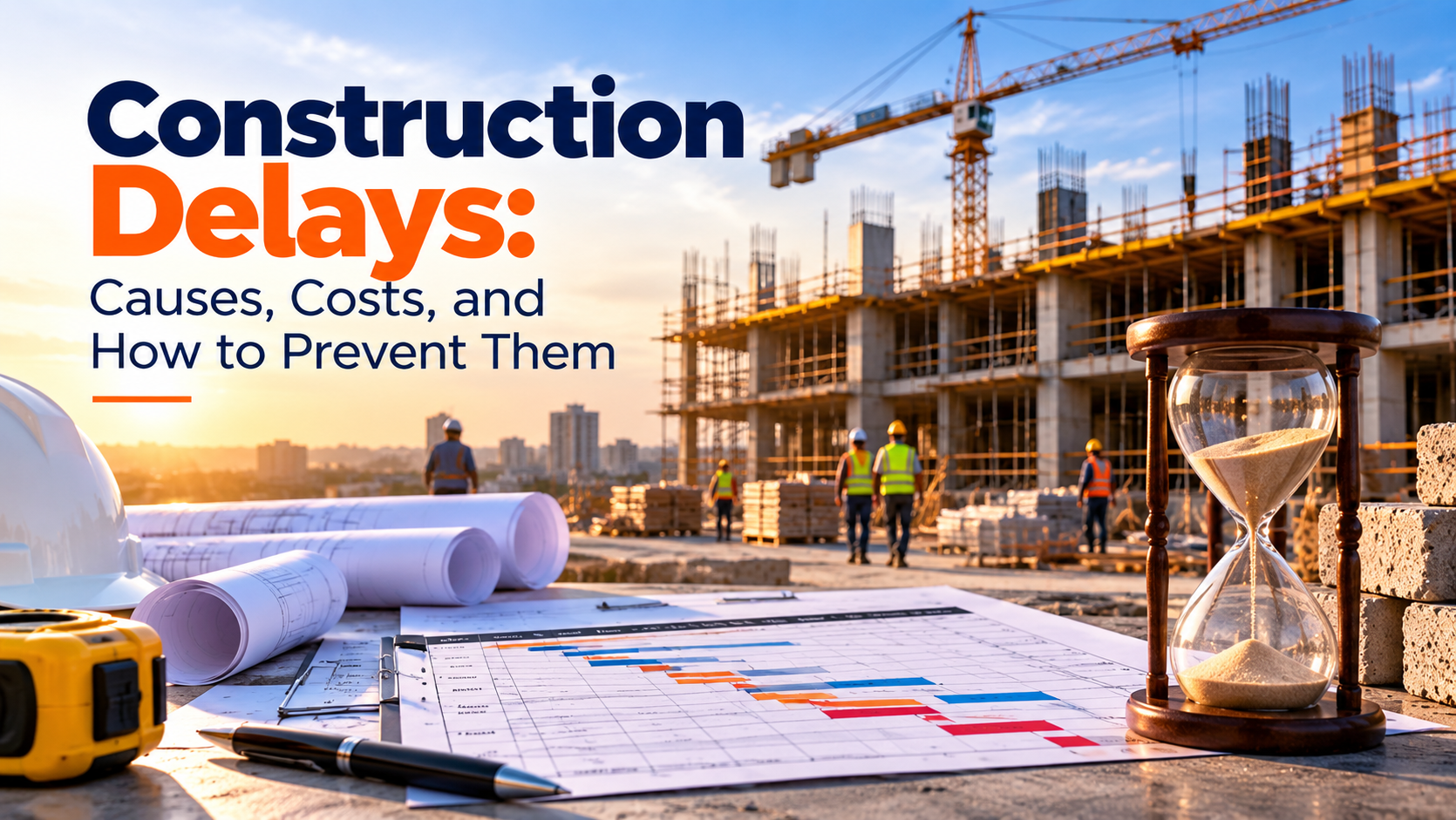
EVERY construction project begins with optimism. A completion date is agreed upon, resources are mobilized, and expectations are high. Yet, many projects fail to meet their planned timelines, leading to increased costs, disputes, and frustration for everyone involved.
Construction delays are not merely an inconvenience—they can significantly affect the financial success and quality of a project. Understanding their causes and implementing effective preventive measures is essential for any successful development.
What Are Construction Delays?
A construction delay occurs when a project takes longer to complete than originally planned. Delays may affect a single activity or disrupt the entire project schedule, often resulting in additional costs and contractual complications.
Common Causes of Construction Delays
1. Inadequate Planning
Poor planning is one of the leading causes of delays. Unrealistic schedules, incomplete designs, unclear project objectives, and poor resource planning often create problems long before construction begins.
2. Delayed Payments
Cash flow is the lifeblood of any construction project. When payments to contractors, suppliers, or subcontractors are delayed, work may slow down or stop altogether.
3. Design Changes During Construction
Frequent changes to drawings, specifications, or finishes after construction has started often requiring demolition, redesign, additional materials, and extra labor, extending the project duration.
4. Material Procurement Challenges
Late delivery of materials, shortages, supplier issues, or purchasing incorrect materials can interrupt planned construction activities and create costly idle time.
5. Labor Shortages
A shortage of skilled workers or poor labor productivity can significantly reduce the pace of construction and affect work quality.
6. Poor Site Supervision
Without effective supervision, mistakes may go unnoticed until rework becomes necessary. Poor coordination between different trades also contributes to unnecessary delays.
7. Weather Conditions
Heavy rainfall, flooding, and extreme weather can temporarily halt activities such as excavation, concrete works, roofing, and external finishes.
8. Delays in Statutory Approvals
Construction may be delayed if permits, inspections, or approvals from relevant authorities are not obtained in time.
9. Unexpected Ground Conditions
Hidden rock formations, weak soils, underground utilities, or high groundwater levels can require redesigns or additional engineering works.
The Real Cost of Construction Delays
Many people focus only on the delayed completion date, but the financial consequences are often much greater.
Construction delays can result in:
- Increased labor costs due to extended project duration.
- Higher equipment hires and operational costs.
- Rising material prices caused by inflation.
- Additional professional consultancy fees.
- Penalties for late completion under contractual agreements.
- Lost rental income or delayed business operations.
- Reduced client confidence and damaged professional reputation.
In many cases, preventing a delay costs far less than correcting one.
How to Prevent Construction Delays
Successful projects rarely happen by chance—they are carefully planned and professionally managed.
Key preventive measures include:
- Develop realistic project schedules before work begins.
- Complete all designs and approvals before mobilizing to site.
- Prepare accurate cost estimates and secure adequate financing.
- Procure critical materials early.
- Appoint competent contractors and consultants.
- Maintain effective communication among all project stakeholders.
- Conduct regular site inspections and progress reviews.
- Monitor project risks continuously and respond quickly when issues arise.
- Minimize unnecessary design changes during construction.
Final Thoughts
While not every delay can be avoided, most can be significantly reduced through proper planning, sound project management, and professional supervision.
At DENLINE CONSULTS LIMITED, we believe that delivering projects on time requires more than hard work—it requires careful planning, technical expertise, and continuous coordination from project inception to completion.
A well-managed project saves time, controls costs, and delivers better value for every client.
LET’S PLAN AND MANAGE THAT PROJECT FOR YOU!
We Shape Our Buildings; Thereafter, They Shape Us.
Leave a Reply