
By DenLine Consults Limited
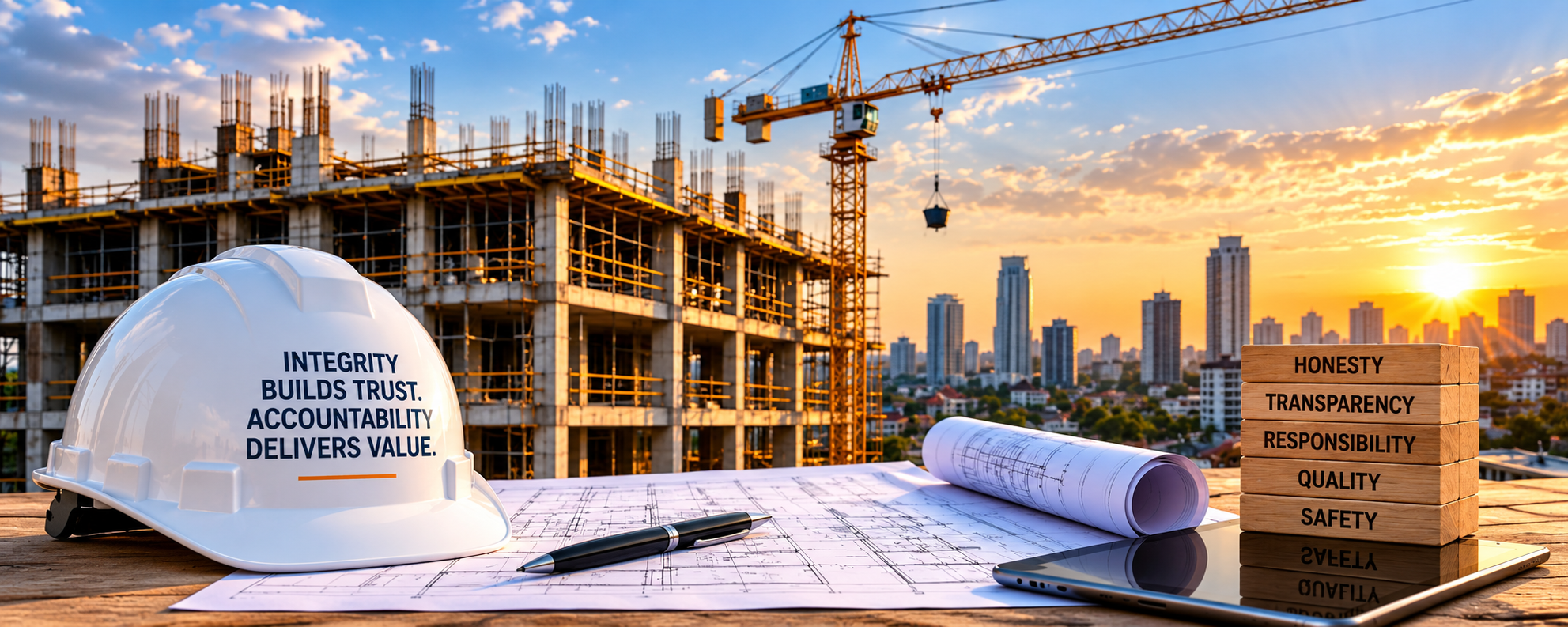
Every successful construction project begins with a vision, but it is integrity and accountability that transform that vision into a safe, durable, and valuable asset. While concrete, steel, and skilled labour are essential components of construction, they alone do not guarantee success. The character of the people entrusted with delivering the project is equally important.
Construction projects involve substantial financial investments, multiple stakeholders, technical complexities, and long-term public responsibility. Whether constructing a family home, a commercial development, or public infrastructure, every decision made during the project has lasting consequences. This is why integrity and accountability are not optional values—they are fundamental principles that underpin every successful project.
What Does Integrity Mean in Construction?
Integrity in construction is the unwavering commitment to honesty, professionalism, and ethical conduct throughout the entire project lifecycle. It means doing what is right even when no one is watching.
- A construction professional demonstrates integrity by:
- Providing honest and realistic cost estimates.
- Being transparent about project risks and limitations.
- Recommending solutions that serve the client’s best interests rather than maximizing profit.
- Using materials that meet the specified standards.
- Adhering to approved drawings, specifications, and engineering requirements.
- Avoiding shortcuts that compromise safety or quality.
Integrity builds confidence between clients, consultants, contractors, suppliers, financiers, and regulatory authorities. It establishes trust that the project is being executed with competence and honesty.
Understanding Accountability
While integrity is about doing the right thing, accountability is about taking responsibility for one’s actions and decisions.
In construction, accountability requires every stakeholder to own their responsibilities and be answerable for the quality and outcomes of their work.
An accountable professional:
- Delivers work in accordance with contractual obligations.
- Meets agreed timelines wherever reasonably possible.
- Communicates challenges promptly rather than concealing them.
- Corrects errors without shifting blame.
- Maintains proper documentation and project records.
- Ensures compliance with applicable laws, regulations, and industry standards.
Accountability creates a culture where problems are addressed early instead of becoming costly disputes later.
Why Integrity and Accountability Matter
Construction projects are built on trust. Clients often commit substantial financial resources before seeing tangible progress. They rely on professionals to make technically sound decisions and manage resources responsibly.
When integrity and accountability guide every stage of a project, the benefits are significant:
- Improved quality of workmanship.
- Better cost control and financial transparency.
- Reduced disputes among stakeholders.
- Greater compliance with safety requirements.
- Stronger professional relationships.
- Increased client confidence.
- Enhanced reputation within the industry.
- Sustainable, long-lasting structures.
Ultimately, ethical practice contributes directly to project success.
The Cost of Compromising Integrity
Unfortunately, the construction industry has witnessed numerous examples where compromised ethics have resulted in severe consequences.
Poor integrity may lead to:
1. Inferior Construction Quality
Using substandard materials or deviating from approved specifications can significantly reduce the safety, durability, and service life of a structure.
2. Cost Overruns
Hidden costs, inflated quantities, unnecessary variations, or financial mismanagement often increase project expenditure beyond the client’s expectations.
3. Project Delays
Poor communication, failure to honor commitments, or neglecting responsibilities frequently disrupt project schedules.
4. Safety Risks
Ignoring established safety procedures or engineering standards places workers, occupants, and the general public at unnecessary risk.
5. Legal and Contractual Disputes
Failure to fulfil contractual obligations can result in litigation, financial penalties, and lengthy project disputes.
6. Loss of Public Confidence
Perhaps the greatest consequence is damage to professional reputation. Trust, once lost, is difficult to rebuild.
How Clients Can Identify Trustworthy Construction Professionals
Selecting the right project team is one of the most important decisions any client will make.
Clients should look for professionals who demonstrate:
- Professional Qualifications and Registration
Ensure consultants and contractors possess the necessary qualifications, licenses, and registrations required by the relevant regulatory authorities. These credentials demonstrate that a professional has met the minimum legal and technical requirements to practice.
However, qualifications and registration alone do not guarantee integrity, competence, or accountability. Ethical conduct is demonstrated through consistent honesty, transparency, professionalism, and a proven commitment to delivering quality work. Clients should therefore consider a professional’s track record, references, communication, and adherence to ethical standards alongside their formal credentials.
- Clear and Transparent Contracts
Well-prepared contracts clearly define scope, responsibilities, timelines, payment terms, and dispute resolution mechanisms.
- Accurate Cost Documentation
Comprehensive Bills of Quantities, realistic estimates, and transparent pricing reduce misunderstandings and minimize unexpected costs.
- Regular Communication
Reliable professionals provide consistent progress updates, discuss emerging risks, and involve clients in key decisions.
- Commitment to Quality
Look for firms that conduct regular inspections, implement quality assurance procedures, and maintain proper project documentation.
- Strong References
Past performance is often the best indicator of future performance. Completed projects and satisfied clients demonstrate reliability and competence.
Building a Culture of Integrity
Integrity is not the responsibility of one individual—it is a culture that must be embraced by everyone involved in construction.
Organizations can strengthen this culture by:
- Promoting ethical leadership at every level.
- Establishing clear codes of professional conduct.
- Encouraging transparency in procurement and financial management.
- Investing in continuous professional development.
- Enforcing quality management systems.
- Prioritizing occupational health and safety.
- Respecting environmental and social responsibilities.
- Holding every team member accountable for their actions.
- When integrity becomes part of an organization’s culture, excellence follows naturally.
The Role of Consultants
Professional consultants play a vital role in safeguarding integrity throughout the project lifecycle.
From feasibility studies and design to procurement, construction supervision, contract administration, and final project handover, consultants help ensure that decisions remain technically sound, financially responsible, and aligned with the client’s objectives.
Independent professional oversight protects both the client’s investment and the long-term performance of the completed facility.
Integrity in Practice: A Current Project Example
A practical example of the value of independent professional oversight can be seen in DenLine Consults Limited’s ongoing role as Quantity Surveyors and Project Managers for the construction of a showroom and warehouse development at Plot 86/90, Fifth Street, Industrial Area, Bugolobi, Kampala.
Our responsibility extends beyond cost management. We continuously monitor project expenditures, verify completed works, administer contracts, review payment applications, coordinate stakeholders, and ensure that decisions are made in the client’s best interests. Through independent professional oversight, we help safeguard the client’s investment by promoting transparency, accountability, value for money, and adherence to the required quality standards throughout the construction process.
This illustrates how professional consultancy services contribute not only to efficient project delivery but also to protecting the long-term value and performance of the completed facility.
Final Thoughts
The true measure of a successful construction project extends beyond its appearance or completion date. It lies in the confidence that every decision was made honestly, every resource was used responsibly, and every stakeholder fulfilled their obligations with professionalism.
Buildings may be constructed from concrete and steel, but their enduring value is built on integrity, accountability, and trust.
At DenLine Consults Limited, we believe these principles are the foundation of every successful project. By combining technical excellence with ethical practice, we strive to deliver solutions that stand the test of time while protecting our clients’ investments and advancing the built environment.
“Concrete gives a building strength, but integrity gives a construction project its lasting value.”
DenLine Consults Limited
We Shape Our Buildings; Thereafter, They Shape Us.
Leave a Reply