
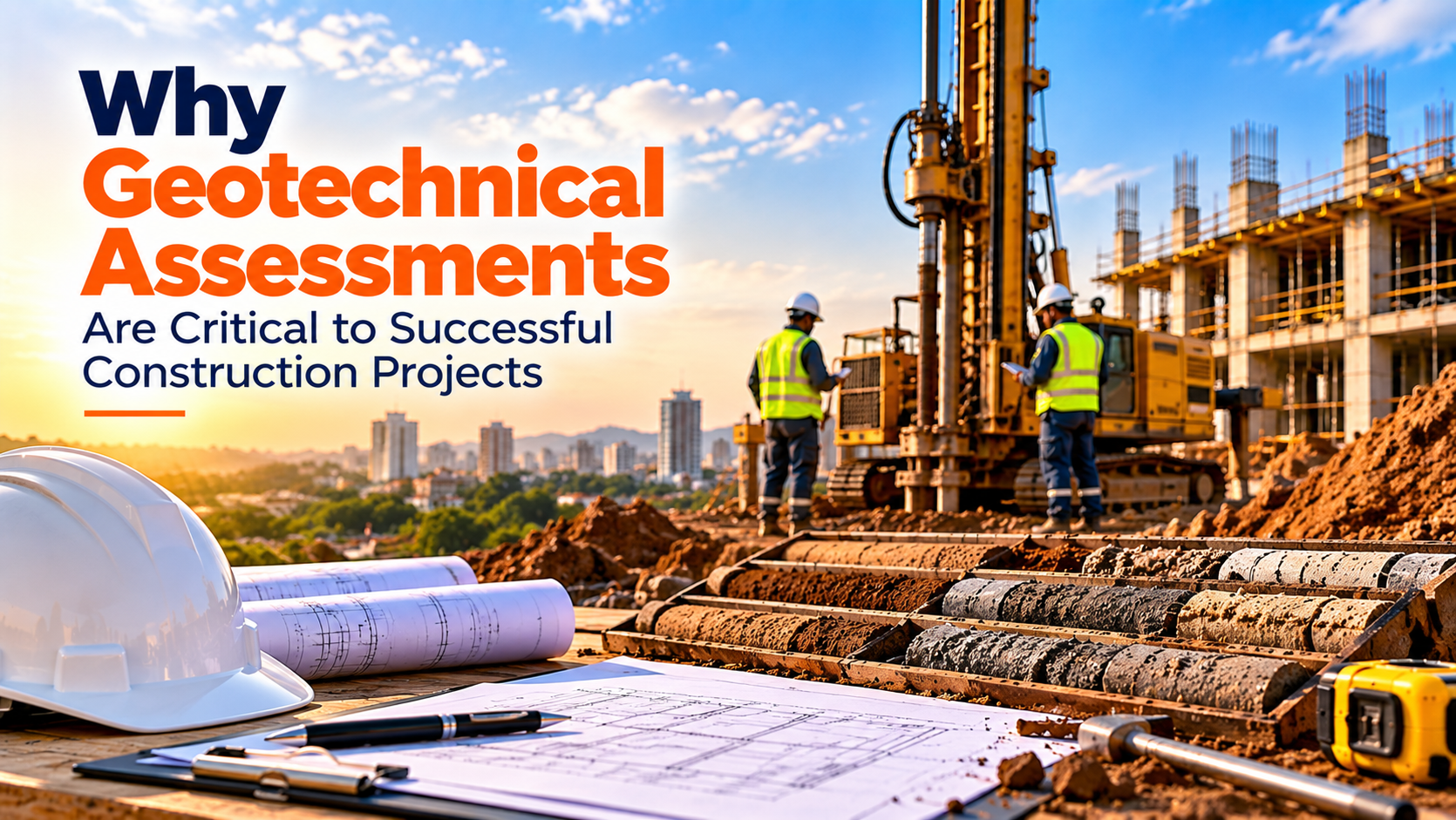
WHERE is the Geotech Report? If you’re a developer likely you’ve had that moment when this question was presented to you by the local authorities while you processed approvals for your construction project. Every structure, regardless of its size or purpose, ultimately relies on the ground beneath it for support. While architectural designs and structural calculations often receive significant attention, the importance of understanding soil conditions is frequently underestimated. This is where geotechnical assessments become indispensable.
A geotechnical assessment is the process of investigating and evaluating the physical and engineering properties of soil and rock at a proposed construction site. Through soil sampling, field testing, and laboratory analysis, engineers determine the ground’s ability to support the intended structure safely and efficiently.
Why Geotechnical Assessments Matter
1. Foundation Design Optimization: Different soil types possess different load-bearing capacities. A geotechnical investigation provides the data required to select the most suitable and cost-effective foundation system, whether shallow footings, rafts, or deep piles.
2. Prevention of Structural Failures: Many building failures can be traced back to inadequate understanding of ground conditions. Weak, expansive, or poorly compacted soils can lead to excessive settlement, cracking, and in severe cases, structural collapse.
3. Cost Savings: Identifying unfavorable ground conditions early allows project teams to incorporate mitigation measures during the design stage. This prevents costly redesigns, construction delays, and remedial works later in the project lifecycle.
4. Risk Management: Geotechnical assessments help identify potential hazards such as landslides, sinkholes, groundwater challenges, soil erosion, and liquefaction risks. Understanding these risks enables informed engineering decisions and safer project execution.
5. Regulatory Compliance: Many construction projects require geotechnical reports as part of planning and approval processes. A thorough investigation demonstrates due diligence and adherence to engineering best practices.
Key Components of a Geotechnical Investigation
- Site reconnaissance and visual assessment
- Borehole drilling and soil sampling
- In-situ field testing
- Laboratory testing of soil and rock samples
- Groundwater evaluation
- Geotechnical analysis and reporting
- Foundation and earthworks recommendations
The Cost of Skipping Geotechnical Investigations
Attempting to save money by omitting a geotechnical assessment can result in significantly higher costs in the future. Foundation failures, excessive settlements, retaining wall failures, and construction delays often stem from insufficient knowledge of site conditions.
Conclusion
A successful project begins from the ground up. Geotechnical assessments provide the critical information needed to design safe, durable, and cost-effective structures. Investing in a comprehensive geotechnical investigation is not an optional expense—it is a fundamental step in responsible construction practice.
“We Shape Our Buildings; Thereafter, They Shape Us.”
Leave a Reply